Here’s something nobody tells you before you spend money: the streaming setup that plays a midweek movie perfectly will fall apart the second a UFC main card goes live. Same hardware. Same provider. Completely different outcome. The reason is load, and combat sports generate the worst kind of it.
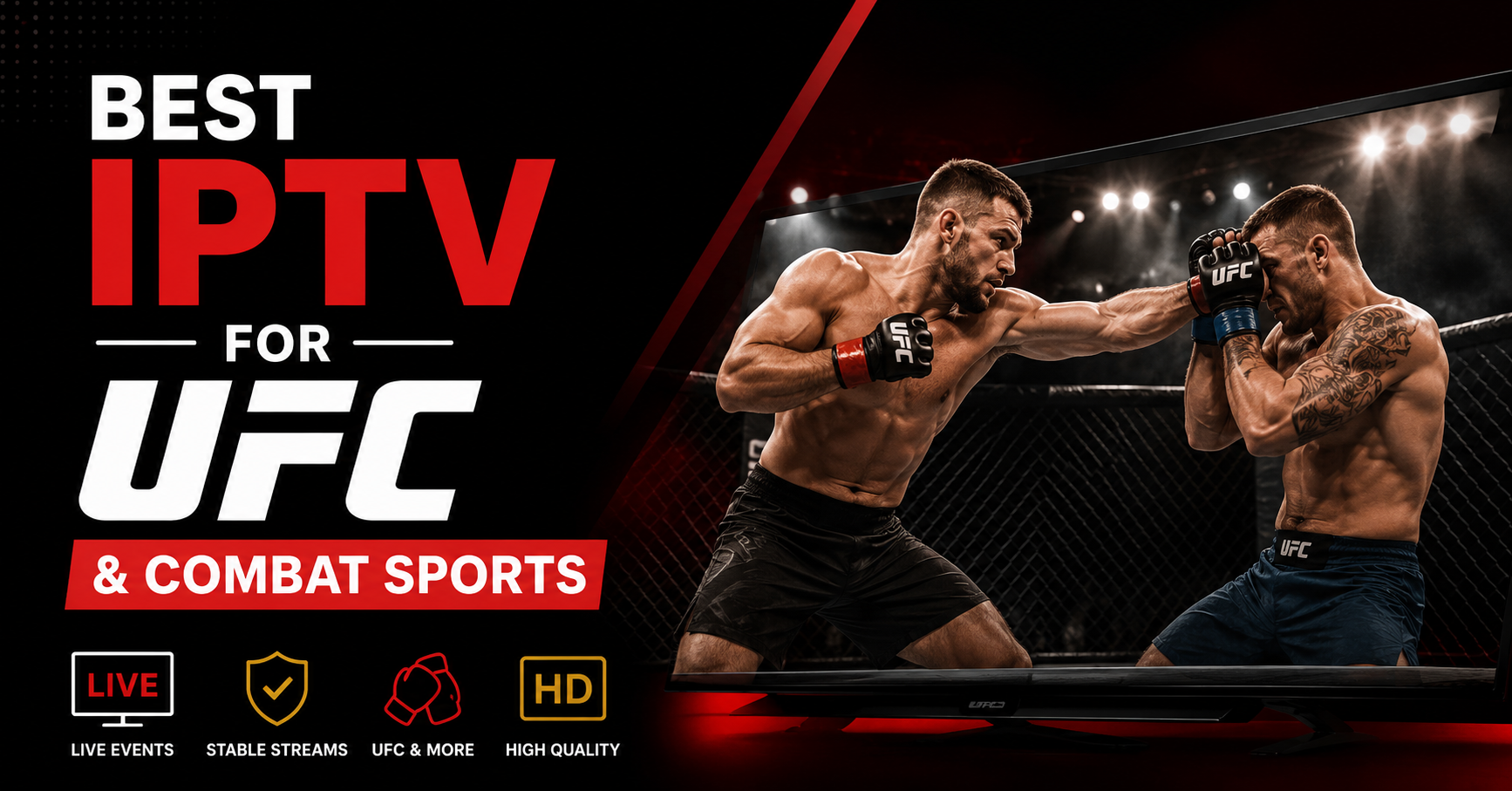
If you want the short version of the best IPTV for UFC and combat sports, it comes down to three things that have nothing to do with channel count: how the service handles a sudden traffic spike at the exact moment a fight starts, whether it has a second source ready when the first one chokes, and how close its delivery sits to a real content distribution network rather than a single overloaded box in a basement somewhere. Pick a setup that nails those, and your prelims to main card experience stays smooth. Miss them, and you’ll be staring at a buffering wheel while your group chat tells you what just happened.
That’s the answer. The rest of this explains why fight night breaks systems that look fine the other six nights of the week, and how to tell a serious operation from one that’s about to ruin your Saturday.
Why Combat Sports Are the Hardest Stream to Deliver
Most people assume a stream is a stream. It isn’t. A movie or a series episode lets the system breathe. Viewers start at different times, pause, rewind, drift off. The load spreads out across hours. A UFC event does the opposite. Everyone arrives within the same ten minute window, all demanding the same live feed, all at once, with zero tolerance for delay because the whole point is watching it happen in real time.
We watched this pattern repeat through years of running panel infrastructure. The boxing pay per view nights and the bigger UFC cards consistently produced the sharpest traffic spikes we ever recorded, sharper than football, sharper than anything scripted. The system doesn’t degrade gracefully under that. It either holds or it collapses, and it usually decides in the first five minutes.
Pro Tip:
Test any service during a live combat event, never during off hours. A provider that streams flawlessly on a Tuesday afternoon tells you nothing. The only meaningful test is a busy main card when their entire customer base is hammering the same feed simultaneously.
The Latency Problem Nobody Warns You About
There’s a difference between a stream that buffers and a stream that’s simply behind. With combat sports, being thirty seconds behind real time is its own disaster. Your neighbour cheers, your phone buzzes with the result, and you’re still watching the fighters circle each other. The technology behind this is HLS, the standard method for chopping live video into small segments and sending them out. Each segment adds a little delay, and poorly tuned systems stack those delays until you’re watching the past.
The best IPTV for UFC and combat sports keeps that segment delay tight and the buffer short, which is a deliberate engineering choice, not luck. Cheap setups run fat buffers because it hides their instability. It looks smoother, but you’re always lagging the live moment.
What Separates a Stable Setup From One That Folds
| Cheap setup | Serious infrastructure |
|---|---|
| One source feeding everyone | Several sources sharing the load |
| Nothing happens when it fails | Automatic switch to a backup |
| No spare capacity for spikes | Headroom reserved for fight nights |
| Long buffer hiding instability | Tight buffer, near live delivery |
| Nobody watching the system | Active monitoring during events |
| Random downtime mid card | Holds through the main event |
The column on the right costs real money to build and maintain. That cost is the actual product you’re paying for, even though it never shows up in a feature list. Anyone can advertise channels. Almost nobody advertises uplink redundancy, because most don’t have it.
How Failover Actually Saves Your Fight Night
Failover is the unglamorous feature that decides everything. The idea is simple: when the primary feed dies, a backup takes over fast enough that you barely notice. The execution is hard. We saw a setup during one major card where the main source dropped at the worst possible moment, right as the headline fight walked out. The systems with real failover recovered inside seconds. The ones without it went dark and stayed dark, and those operators spent the next week bleeding customers who’d already moved on.
That’s the brutal economics of this niche. A movie buffering is annoying. A title fight going dark is unforgivable, and people don’t forgive it. They cancel.
The Reseller Side: Why Fight Nights Make or Break a Panel
If you run an IPTV reseller panel, combat sports are your stress test and your reputation in one event. This is the part the subscriber never sees. A reseller selling access through a credit based system inherits whatever the upstream infrastructure does. When the source holds, the reseller looks like a hero. When it folds, every customer blames the reseller directly, not the invisible panel owner three layers up.
A mistake we repeatedly see among newer IPTV operators is treating every night as identical. They provision for an average Tuesday and get flattened by a Saturday main card. The experienced panel owner does the opposite. They know which dates matter, they confirm upstream capacity before those dates, and they brace their sub reseller network for the spike.
Pro Tip:
If you’re a credit reseller, mark the major UFC and boxing dates on a calendar and contact your upstream provider before each one. Ask directly whether they’ve reserved capacity. A provider that answers vaguely is telling you something. The good ones know their fight night numbers cold.
Reseller Mistakes That Cost Customers During Big Events
After reviewing hundreds of support requests across fight weekends, the same failures kept surfacing. Most weren’t exotic. They were predictable and avoidable.
- Selling more access than the upstream source could carry under peak load
- Never testing the service during an actual live event before reselling it
- Ignoring device compatibility until a customer’s specific player app choked mid fight
- Having no backup provider relationship when the primary one failed
- Treating panel credits as pure margin while underinvesting in reliability
The UK IPTV resellers who survived multiple enforcement waves and outages weren’t the cheapest. They were the ones who understood that an IPTV business owner lives and dies on the nights that matter most, and combat sports nights matter more than almost anything else on the calendar.
ISP Interference During High Profile Events
Here’s something that surprised even us early on. During certain major events, we noticed unusual ISP behaviour, throttling and routing changes that seemed to cluster around exactly the times big fights were happening. Whether deliberate or just congestion, the effect on the viewer is the same: degraded delivery at the worst moment.
Modern infrastructure fights this with multiple uplinks and smart routing, sending traffic along whichever path is performing best in real time. In 2026 this matters more than it used to, because traffic fingerprinting and AI driven blocking have grown more sophisticated. A single path setup has nowhere to go when that path gets squeezed. A diversified one reroutes and keeps going.
Device and App Reality: Where Streams Quietly Die
A stable source still fails if it hits the viewer on a weak playback setup. We’ve watched perfectly good feeds stutter purely because of the device handling them. Older streaming sticks run out of processing headroom during high motion footage, and combat sports are nothing but high motion, fast camera cuts, rapid movement, the hardest thing to render cleanly.
Pro Tip:
For fight nights specifically, use a wired connection over WiFi if you possibly can, and close background apps on whatever device you’re streaming to. A surprising number of “the stream is broken” complaints during big cards trace back to a congested home network, not the provider at all.
Choosing the Best IPTV for UFC and Combat Sports: A Practical Filter
Forget marketing language. Run any candidate through this instead:
- Test it live during an actual fight card, not during quiet hours
- Watch how it behaves in the first ten minutes when load peaks
- Check how far behind real time the stream sits
- Note whether it recovers quickly from any hiccup or stays frozen
- If reselling, confirm the upstream has genuine failover and spare capacity
- Confirm it plays cleanly on the specific device you’ll actually use
The best IPTV for UFC and combat sports will pass all six without drama. Most options fail at step one, which is exactly why testing during a real event filters the field faster than any review ever could. For operators building a reliable distribution network, working with infrastructure that’s engineered for these spikes is the difference between keeping customers and explaining yourself, which is part of why panels built on serious backends like the ones behind britishreseller.com tend to hold when it counts.
Why Cheap Always Costs More on Fight Night
The hidden cost of cheap infrastructure shows up exactly when you can least afford it. A budget setup saves you a little every quiet night and then takes it all back in one catastrophic evening when a championship card goes dark and your patience, or your customers, evaporate. We’ve seen IPTV business owners chase the lowest upstream price, win on margin for months, then lose half their base in a single bad weekend. The math never favours cutting corners on the nights that define the service.
FAQ
What makes the best IPTV for UFC and combat sports different from regular streaming?
The difference is how it handles sudden, synchronized load. Combat sports pull everyone onto the same live feed within minutes, so the best IPTV for UFC and combat sports relies on multiple sources, automatic failover, and tight latency. Regular content spreads load across hours and forgives weaknesses that fight nights expose instantly.
How can I test the best IPTV for UFC and combat sports before committing?
Test only during a live fight card, never off peak. Watch the first ten minutes when the spike hits, check how far behind real time you are, and see whether it recovers from any stumble. A service that’s flawless on a quiet afternoon proves nothing about how it performs when it actually matters.
Why does my stream lag behind the live result during fights?
That’s latency, usually from oversized buffering. Many setups stack long buffers to mask instability, leaving you seconds behind real time while neighbours and notifications spoil the outcome. Well tuned infrastructure keeps segment delay short, so what you watch stays close to the actual live moment.
As an IPTV reseller, how do I prepare my panel for big fight nights?
Mark major dates ahead of time and confirm your upstream has reserved capacity and working failover before each one. Don’t oversell beyond what the source can carry at peak. A UK IPTV reseller panel that braces for the spike keeps customers, while one that treats fight night like any night loses them fast.
Does my device affect combat sports streaming quality?
Yes, more than people expect. Underpowered streaming sticks struggle with the fast motion and rapid cuts of combat sports, causing stutter even on a healthy feed. Use a wired connection when possible, close background apps, and make sure your player handles high bitrate live video smoothly.
Can ISP throttling ruin a stream during major events?
It can. Congestion and routing changes often cluster around high profile events, degrading delivery right when it matters. Infrastructure with multiple uplinks and intelligent routing can sidestep a struggling path. A single route setup has no escape when that route gets squeezed during peak fight night demand.
Why do resellers lose customers specifically on fight nights?
Because expectations peak exactly when systems are most stressed. A movie buffering gets forgiven. A title fight going dark does not. Customers cancel over one ruined main event, which is why a credit reseller’s reputation rides almost entirely on performance during these high stakes combat sports nights.
Conclusion
The best IPTV for UFC and combat sports isn’t the one with the longest channel list or the cheapest monthly price. It’s the one engineered to survive the exact moment every other system fails, the synchronized rush of a main card going live. Latency control, real failover, spare capacity, and route diversity are the features that matter, and almost none of them appear on a sales page. For subscribers, the lesson is to test during a real event and trust nothing else. For every IPTV reseller and panel owner, fight night is the audit you can’t fake, the night that quietly decides whether your customers stay or walk.
Fight Night Checklists
For subscribers:
- Test the service during an actual live card before paying
- Use a wired connection on the night when possible
- Close background apps on your streaming device
- Note how far behind real time the feed runs
- Have a backup plan ready for the biggest events
For resellers:
- Mark major UFC and boxing dates in advance
- Confirm upstream capacity and failover before each one
- Avoid overselling beyond peak load limits
- Keep a second provider relationship as insurance
- Test your own service live before every major card
For sub resellers:
- Verify what your panel owner guarantees for peak events
- Set realistic expectations with your own customers
- Watch performance during the first event you resell
- Report instability upstream immediately, don’t absorb it silently
- Track which dates trigger complaints and prepare for repeats
One last thing worth holding onto: the service that wins is the one still standing when the headline fighters walk out and everyone hits play at once. That single moment tells you more than a month of quiet nights ever will. Test for it, build for it, and judge everything else against it.