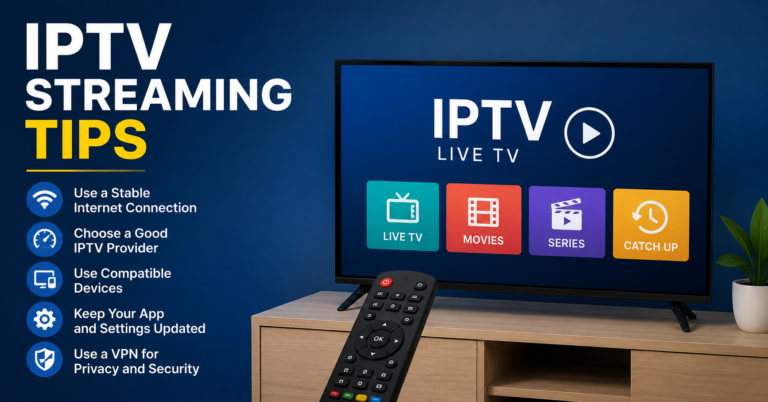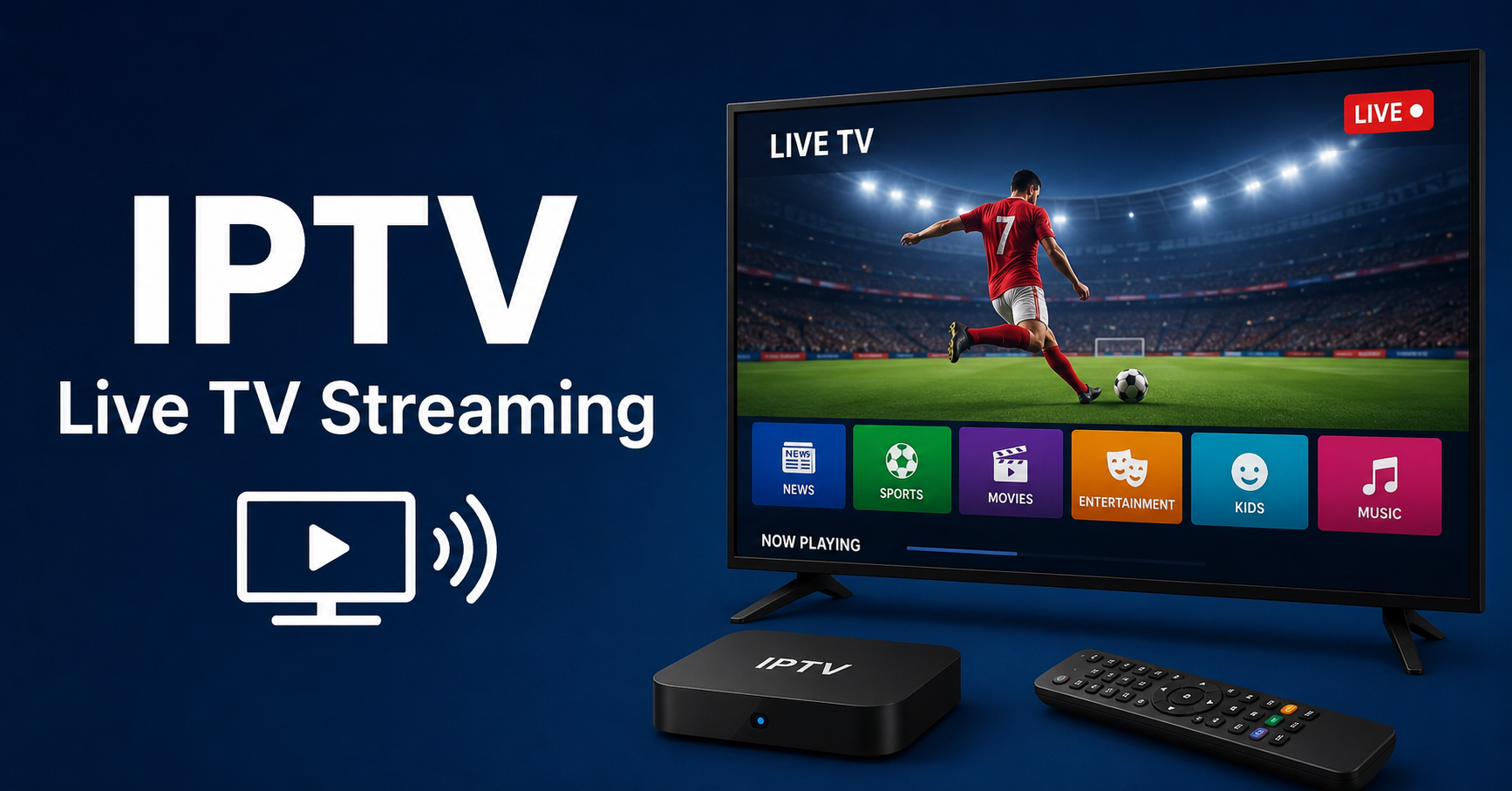
Three years ago, a reseller with 200 customers and one cheap VPS could get away with it. In 2026, that same setup will collapse during the first major football weekend — and your refund queue will be longer than your customer list. IPTV live TV streaming has never been more in-demand, and the infrastructure bar has never been higher. If you’re still running on hope and a shared server, this is the article that could save — or end — your operation.
IPTV live TV streaming has reshaped how households consume television. From family movie nights to live sport, the shift away from traditional TV packages is permanent. But behind every smooth stream is a reseller making decisions that are either building a sustainable business or quietly burning one down. This guide is for people operating in the real world — not a tutorial blog written by someone who’s never lost a server at midnight.
Why IPTV Live TV Streaming Infrastructure Isn’t Plug-and-Play
The biggest misconception new resellers carry into this business is that IPTV live TV streaming runs itself once the panel is set up. It doesn’t. You are running a live content delivery service. Every stream you sell is a concurrent connection that needs bandwidth, processing power, and a path from server to screen that survives ISP interference.
A basic reseller panel gives you the controls. What it doesn’t give you is a stable uplink, redundant servers, or protection from ISP-level blocking. Those are provider-side decisions — and they directly affect every customer connection you’re responsible for.
- Single-server setups have one failure point. When that server goes, everything goes.
- Oversold bandwidth on cheap VPS hosts throttles during peak hours — exactly when your customers are watching.
- No backup DNS means a single block can make your entire line-up unreachable inside 60 seconds.
- HLS latency misconfiguration causes buffering loops that appear as provider failure even when the stream is technically live.
Before signing with any provider, test their infrastructure during a live Champions League or Premier League match evening — not mid-Tuesday afternoon. If it holds clean with no rebuffering across three different devices simultaneously, their load management is legitimate. If it drops, you’ve just seen your future support queue.
The 2026 ISP Blocking Landscape: AI-Driven and Getting Sharper
ISP blocking of IPTV live TV streaming in 2026 is no longer a blunt instrument. Deep packet inspection (DPI) technology has matured to the point where static IPs and predictable stream headers are flagged within hours of a piracy complaint being filed. The enforcement cycle — complaint, detection, block — now happens faster than most providers can rotate infrastructure.
Major broadcasters have moved enforcement upstream, pressuring ISPs directly through automated rights-management systems rather than waiting for court orders. This means a provider relying on a fixed CDN with no IP rotation is building on sand.
Three ISP Blocking Methods Resellers Must Understand
- DNS Poisoning: The ISP intercepts DNS queries for known streaming domains and returns empty or incorrect responses. Customers experience “stream not found” errors that look like provider failure.
- IP Range Blacklisting: Entire VPS data centre subnets get blacklisted once one IP is flagged. Providers without IP diversity across multiple data centres are especially vulnerable.
- Port-Level Traffic Throttling: Common IPTV streaming ports get deprioritised during peak hours, causing buffering that doesn’t register as a full block but degrades picture quality below acceptable thresholds.
AI-assisted traffic profiling tools deployed by ISPs in 2026 can identify IPTV stream patterns even through VPNs, using flow-level fingerprinting rather than content inspection. Resellers should ensure their providers are using anti-fingerprinting transport layers — not just basic VPN tunnelling.
Why Backup Uplink Servers Are Non-Negotiable for Serious IPTV Resellers
If your provider has one uplink — one path between their servers and your customers’ screens — you are one infrastructure event away from a complete outage. Backup uplink servers exist precisely for this scenario: when the primary CDN gets blocked, throttled, or crashes under load, failover happens automatically without the customer ever knowing.
This is the single biggest infrastructure gap between hobbyist resellers and operators running professional IPTV live TV streaming services. Backup servers cost money. They require proper load balancer configuration. And they’re the difference between a temporary blip and a full-scale customer exodus.
| Feature | Budget Provider (Single Uplink) | Professional Provider (Multi-Uplink) |
|---|---|---|
| Failover on ISP block | None — full outage | Automatic within 30–90 seconds |
| Peak load handling | Degrades above 70% capacity | Load-balanced across nodes |
| DNS poisoning recovery | Manual — can take hours | Automated DNS re-routing |
| HLS latency under load | 5–35 second spikes | Consistent sub-8 second |
| Data centre diversity | Single location | Multi-region (EU + North America minimum) |
| Reseller confidence for premium sports | High risk | Manageable with monitoring |
IPTV Live TV Streaming Panel Management: Credits, Connections, and Avoiding Overselling
Panel credits are the currency of IPTV live TV streaming reselling. Mismanaging them — either running out mid-month or overselling your connection allowance — creates problems that no amount of customer service can recover from quickly.
The practical discipline is to track your credit-to-active-line ratio weekly, not monthly. Credits don’t go stale in most modern panels, but expired lines sitting dormant still count against your active connection allowance on some provider configurations.
Three Common Panel Mistakes That Kill Reseller Margins
- Activating full-year subscriptions before vetting the provider: If you buy 100 annual credits and the provider’s infrastructure collapses in month two, those credits are gone. Start with 30-day lines until you have 60 days of verified uptime data.
- Not monitoring simultaneous connections: Most panels limit each line to 1 or 2 simultaneous streams. Customers sharing credentials across five devices will hammer your connection ceiling and create buffering for everyone on that server node.
- Ignoring the trial-to-paid conversion window: Trial lines that expire without conversion aren’t just lost revenue — they’re wasted panel load on your provisioning infrastructure. Set a hard follow-up routine at the 24-hour mark.
The best resellers run two separate panels: one for retail customers, one for their own device testing and monitoring. Never test stream quality on a customer line. Keep a dedicated monitoring line on each server region so you know about downtime before your customers do — and you have a 10-minute head start on managing the fallout.
What Customer Churn in IPTV Live TV Streaming Actually Looks Like
Churn in IPTV live TV streaming rarely comes with a complaint. It comes with silence. A customer who buffers during the last ten minutes of a title fight doesn’t file a ticket — they just don’t renew. You find out three weeks later when your active line count drops and you can’t trace why.
The psychological trigger isn’t outages — it’s outages without communication. Customers in 2026 are used to service interruptions. What they’re not used to is being left in the dark. The resellers with the best retention rates send proactive alerts through WhatsApp or Telegram the moment their monitoring detects a regional issue, before a single support message comes in.
Churn Prevention Tactics That Actually Work
- Pre-event status updates: Send a message before every major live sport event confirming server status. It costs 30 seconds and sets expectations before the event starts.
- Instant compensation: A 48-hour extension on a line during a verified outage costs you almost nothing but completely reverses the churn impulse.
- Offboarding intelligence: When someone doesn’t renew, ask why — one question, privately. The answers tell you more about your infrastructure and pricing than any analytics dashboard.
How Serious Resellers Scale IPTV Live TV Streaming Beyond 200 Customers
Scaling a IPTV live TV streaming operation beyond the 200-customer mark requires a shift in how you think about the business. Below 200, personal management works. Above it, you need systems — and the most important system is your sub-reseller structure.
Sub-resellers allow you to distribute sales and basic support work downstream while you focus on infrastructure monitoring, credit management, and provider relationships. A well-run sub-reseller layer can take an operation from 200 to 1,500 active lines without proportionally increasing your support overhead — provided you’ve trained your sub-resellers properly and given them only enough panel access to manage their own customers.
Scaling Principles That Separate Operators from Hobbyists
- Never give sub-resellers admin credits: They manage lines, not credits. Keep purchasing authority at the top level to prevent credit drain from panic-buying or overselling.
- Standardise your device support list: Supporting every box, stick, and smart TV configuration is unsustainable at scale. Define three supported setups — Firestick, Android box, Smart TV app — and build troubleshooting guides for each. Everything outside that list is “unsupported but can try.”
- Segment your customers by connection reliability: Customers on fibre with consistent home networks are low-support. Customers on mobile broadband or shared WiFi are high-churn regardless of your infrastructure. Price and expectation-set accordingly.
When your IPTV live TV streaming operation reaches 500+ active lines, dedicated uptime monitoring with Telegram bot alerts becomes operational necessity, not optional. Tools like UptimeRobot configured to your provider’s stream endpoints give you real-time visibility. Being the reseller who tells customers about an issue — rather than the one who responds to complaints — is the single biggest trust differentiator in this market.
IPTV Live TV Streaming Pricing Models: Margin, Perception, and Competitive Positioning
The race to the bottom on pricing is the fastest way to destroy a IPTV live TV streaming business. Customers who buy on price alone churn on price alone — the moment someone undercuts you by two pounds, they’re gone. Building margin and retention means positioning on reliability, not competing on cost.
A professional reseller in 2026 typically operates at three tiers:
- Entry tier (1 month): Higher per-month rate, lower commitment. Attracts trialists. Convert aggressively in week three.
- Mid tier (3–6 months): Your volume tier. Best margin per conversion. Most of your stable customer base lives here.
- Annual tier: Discount for commitment, but only offer this once you have 90+ days of clean uptime data from your provider. Never sell annual subscriptions on a provider you haven’t fully tested.
Sub-resellers undercut each other constantly. If your retail pricing is only 20–30% above your reseller cost, you have no room to absorb refunds, outage credits, or provider price increases. Target a minimum 50–60% margin on your retail lines. If your current provider’s wholesale pricing won’t support that margin, the problem is your provider — not your prices.
Frequently Asked Questions
What makes IPTV live TV streaming different from traditional cable?
IPTV live TV streaming delivers content over internet protocol networks rather than coaxial or satellite infrastructure. This means picture quality depends entirely on your uplink’s bandwidth and your provider’s CDN architecture — not a signal tower. Latency, buffering, and crash frequency are directly tied to server load management, not broadcast technology.
How does IPTV live TV streaming get blocked by ISPs in 2026?
Modern ISPs use deep packet inspection (DPI) and AI-assisted traffic profiling to detect IPTV streaming patterns. DNS poisoning, IP blacklisting, and port throttling are the three most common methods. In 2026, pattern-based blocking has replaced simple domain blocking — meaning streams using static IPs without rotation are the first to go down.
What is the minimum server infrastructure needed to run a reliable IPTV live TV streaming reseller operation?
At minimum: one primary VPS with at least 1Gbps uplink, one dedicated backup server in a separate data centre, and a panel with auto-failover configured. Under 100 active connections you can run lean. Above 300 concurrent streams, load balancing across multiple nodes is not optional — it’s the difference between a functioning business and a refund queue.
Can I run an IPTV live TV streaming reseller business from a mobile panel?
Yes, most modern reseller panels have mobile-responsive admin dashboards. However, bulk credit management, connection diagnostics, and customer ban management are significantly faster on desktop. For quick tasks — activating a trial, checking online connections, or suspending a line — mobile works fine. Never do server migrations or failover configuration from mobile.
Is IPTV live TV streaming stable enough for household use during premium sports events?
Stability during peak events depends entirely on provider infrastructure, not the IPTV format itself. A provider with properly load-balanced, multi-CDN architecture can deliver consistent HD streams during major sporting events. Providers running on shared or oversold servers are the ones that crash during high-demand windows — that failure is infrastructure, not the technology.
How do resellers handle customer churn caused by temporary buffering issues?
The fastest churn trigger is buffering during a match or movie without any explanation from the reseller. Proactive communication changes the equation — alerting customers to scheduled maintenance or known upstream issues before they complain converts a frustration into trust. Automated WhatsApp or Telegram status updates linked to your panel’s uptime monitoring eliminate the majority of churn-causing support tickets.
What is HLS latency and why does it matter for IPTV live TV streaming resellers?
HLS (HTTP Live Streaming) latency is the delay between a live event happening and it appearing on your customer’s screen. For most IPTV setups this ranges from 5–30 seconds. High latency becomes a real problem when customers are watching alongside social media — they see spoilers before the stream catches up. Low-latency HLS delivery is now a competitive differentiator for premium reseller tiers.
How many panel credits should a new IPTV reseller buy to start?
Start with enough to cover 20–30 trial activations and 10–15 paying customers — typically 50 to 100 credits depending on your panel’s credit-to-line ratio. Avoid buying large credit packages until you have verified the provider’s uptime over at least two live sporting weekends. Overshooting your first buy locks capital into a provider you may need to leave.
IPTV Reseller Success Checklist
Execution-focused steps for active resellers — no theory, no filler.
- Verify your provider has multi-region backup uplink servers before taking on paying customers
- Run a stress test during a live premium sport event before committing to annual panel credits
- Set up UptimeRobot or equivalent monitoring on your provider’s primary stream endpoint with Telegram alerts
- Maintain a dedicated monitoring line separate from customer lines on every server region
- Build a pre-event status communication routine for all high-traffic evenings
- Cap sub-reseller access to line management only — never credit purchasing
- Define and document your three supported device configurations — refuse to support everything
- Run a 60-day uptime log before offering annual subscription pricing to customers
- Price for 50–60% minimum margin to absorb refunds, credits, and provider cost increases
- Contact cancellation-silent customers at renewal with a one-question feedback message
- For trusted UK-based IPTV live TV streaming reseller infrastructure guidance, visit British Seller — UK’s leading IPTV reseller resource.