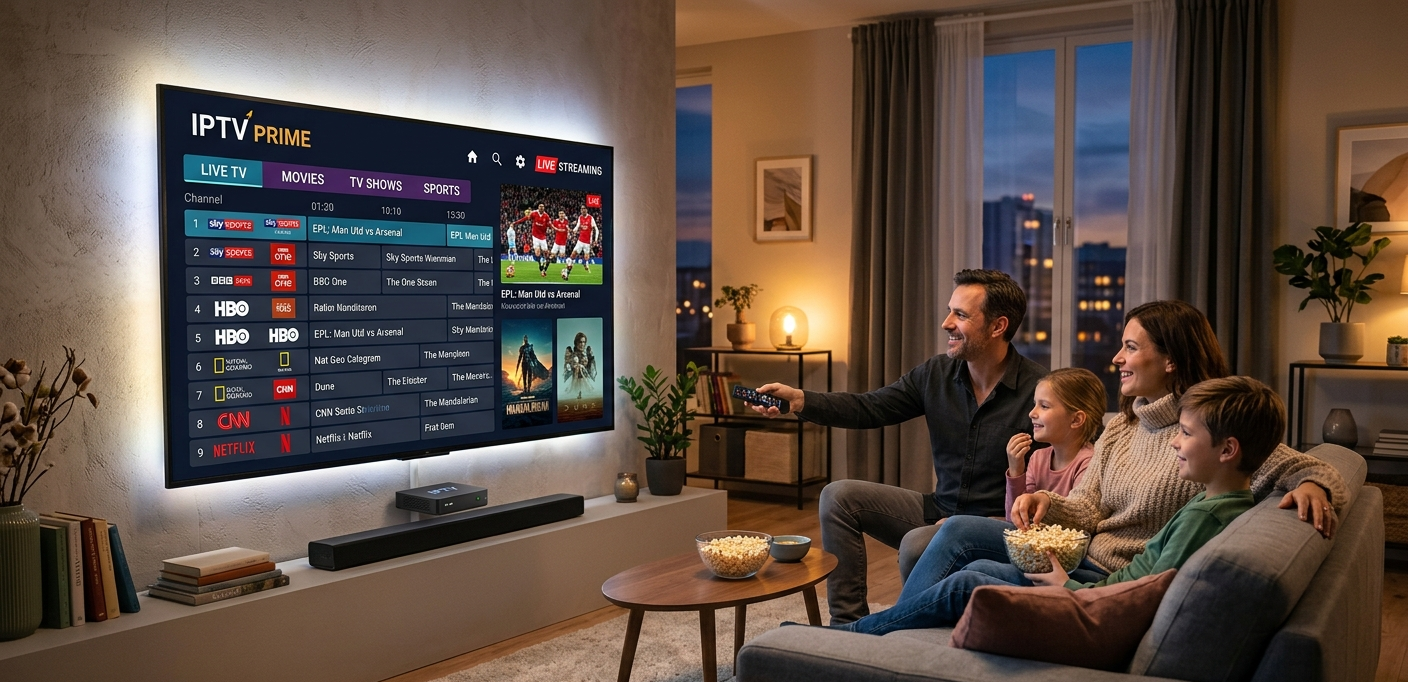
Two minutes before kick-off. A Premier League fixture that half my client base had been waiting for all week. My phone starts lighting up, not with the usual “cheers mate, working great” messages, but with the kind of texts that make your stomach drop.
“It’s buffering.” “Mine’s frozen.” “Bro what’s going on, nothing’s loading.”
I’d switched providers three weeks earlier. Saved myself about £40 a month on panel costs. Felt clever about it at the time. By 8:15 that night, I’d issued six refunds, lost two customers permanently, and spent the next hour on Telegram getting ghosted by a “support team” operating out of god-knows-where.
Table of Contents
ToggleThat one decision, chasing a cheaper IPTV service without properly vetting the infrastructure behind it, cost me far more than £40. That’s the lesson this entire article is built around.
What “IPTV Service” Actually Means at the Infrastructure Level
Most people entering this market think they’re selling subscriptions. They’re not. They’re selling reliability. The subscription is just the packaging, what the customer is actually paying for is the ability to watch whatever they want, whenever they want, without a spinning buffer wheel ruining the moment.
Behind every functional IPTV service sits a chain of dependencies: content delivery networks, server clusters, transcoding layers, and middleware that handles authentication. When any link in that chain wobbles, your customers feel it immediately, and they come to you, not the provider.
This is why understanding panel architecture matters even if you never touch a server yourself. Xtream Codes-style panels, for instance, distribute load differently than MAG-authenticated systems. STBEmu clients handle stream dropout differently than smart TV apps. Knowing this means you can diagnose complaints faster and set realistic expectations before someone fires off an angry review somewhere public.
Pro Tip: Always ask a potential provider how their anti-freeze system works. If they can’t explain it clearly, or worse, claim they don’t need one, walk away. Anti-freeze buffering protocols are non-negotiable for live sport streams in the UK market.
The Pressure Points Unique to UK Demand
The UK IPTV market isn’t like other markets. The 3pm Saturday blackout alone creates a demand spike unlike anything you’d see in most European countries, thousands of viewers simultaneously seeking streams of matches that aren’t broadcast domestically. Then there’s the Champions League mid-week, boxing Saturday nights, and the general expectation from British customers that things simply work without fuss.
What this means practically: you need a provider whose servers are located close enough to reduce latency, with sufficient bandwidth allocation per stream. I’ve tested providers claiming UK-based servers who were clearly routing through Eastern European nodes, the ping times don’t lie, and neither do the complaints during high-traffic periods.
For IPTV Panel resellers operating in this environment, uptime percentage isn’t a vanity metric. It’s the difference between a sustainable business and a customer service nightmare.
The maths is simple: your monthly churn risk is roughly your downtime hours divided by total hours, multiplied by your active subscribers, multiplied by your average subscription value. Run that calculation on even a 97% uptime provider during a month with two Premier League weekends and you’ll quickly see why that final 3% matters enormously.
What I Actually Check Before Committing to a Panel
I’ve been inside enough panels now to know what healthy looks like versus what’s about to implode. Here’s what I actually check before committing to a provider.
Concurrent stream capacity versus overselling rate matters first. A provider offering 10,000 connections sounds impressive until you realise they’re running infrastructure that comfortably supports 6,000. The rest is optimism, yours and theirs. Ask for real capacity numbers, not marketing numbers.
Credit rollover policy matters too. Some panels expire your reseller credits if unused within 30 days. Others carry them forward indefinitely. This directly affects your cash flow planning, especially if your customer base has seasonal patterns.
Panel response time under load is the real test. Test the panel during a live match, not a Tuesday afternoon, since that’s when the cracks appear. I had one provider whose panel login literally timed out on a Saturday at 3:05pm, completely useless timing.
Refund and replacement policy tells you a lot about a provider’s character. Reputable providers give trial credits. They have a clear process when streams fail. They don’t disappear when things go wrong. If a provider has no documented policy on this, that’s your answer.
Pro Tip: Request a 24-hour trial line before purchasing any significant credit volume. Any provider worth working with will offer this. Those who refuse are protecting themselves, not you.
Scaling Your IPTV Service Without Burning Out
There’s a phase most resellers hit around the 30-50 subscriber mark where the business starts feeling less like income and more like a second job. Support messages at midnight. Billing chases. Someone’s MAG box not connecting because they’ve accidentally changed the portal URL themselves.
The resellers who scale past this point without losing their minds have a few things in common. They document everything, panel login processes, common troubleshooting steps, device setup guides, so they can hand things off or automate responses. They segment their customer base and identify who the high-maintenance, low-value subscribers actually are. And they resist the urge to compete purely on price, because that race only ever goes one direction.
From a pure margin perspective, your net profit is your active subscribers multiplied by your monthly rate, minus your credits cost, support time value, and churn losses combined.
The “support time value” component is where most IPTV Panel resellers undersell themselves. If you’re spending eight hours a month troubleshooting for low-paying customers, that time has a real cost, one that doesn’t appear in your panel dashboard.
Pro Tip: Build a simple FAQ document for your customers covering the top five issues you get asked about. Share it proactively when they sign up. You’ll cut your inbound support volume by 30-40% within the first month.
The Quiet Mistakes That Kill Reseller Businesses
I’ve watched resellers make the same errors repeatedly, sometimes I’ve made them myself, which is the more honest thing to admit.
Switching providers mid-cycle to save small amounts is the first one. Already covered this above with my match-night horror story. Stability is worth paying for. The maths almost always favours staying with a reliable provider over gambling on a cheaper one.
Buying large credit bundles upfront from unverified providers is another. The IPTV space has no shortage of people willing to take your money for credits that evaporate in two weeks. Start small, verify performance, then scale your purchasing.
Ignoring device diversity in your customer base causes problems too. Your Firestick users, MAG box users, and smart TV users all behave differently on the same stream. A provider might perform brilliantly on one device category and terribly on another. Test across devices before committing.
Promising uptime you can’t guarantee is the last and most damaging one. Nothing destroys customer trust faster than overpromising and underdelivering. Be honest about what IPTV is, a supplementary service, not a guaranteed broadcast replacement.
Where panelsprime.com Fits Into All of This
After the panel-switching disaster I described at the start of this article, I became considerably more careful about where I directed my business. What I needed, and what most serious UK resellers eventually figure out they need, is a provider with transparent infrastructure, real support responsiveness, and credits that actually represent what they claim to represent.
panelsprime.com operates specifically within the UK IPTV reseller market, which means the infrastructure decisions made there reflect the actual demand patterns UK operators face. That matters more than it sounds. A provider optimised for a different market will almost always underperform during UK peak events regardless of what their marketing says.
I’m not going to oversell it, do your own trial, test during a weekend with live sport, run your own numbers. But if you’re looking for somewhere to start or restart after a bad experience with a previous provider, it’s worth the look: panelsprime.com
IPTV Reseller Success Checklist
Vet before you commit. Always run a trial line during peak hours, match nights, not midweek afternoons, before purchasing bulk credits from any new provider.
Know your panel architecture. Understand how your chosen panel handles concurrent connections, anti-freeze protocols, and authentication so you can troubleshoot faster when things go sideways.
Price for sustainability, not competition. Undercutting the market feels smart until your margins disappear and your support workload doesn’t. Know your actual cost per subscriber including your time.
Document your customer processes. Setup guides, common fixes, billing information, automate and systematise before you scale, not after you’re overwhelmed.
Maintain a provider backup. Never operate with a single provider and no contingency. Have a tested alternative ready so the next match-night crisis doesn’t become a customer exodus.