IPTV in UK: Why the Market Plays by Its Own Rules
The UK IPTV market is unforgiving in one specific way: demand concentrates almost entirely around football, and any weakness in a panel’s infrastructure gets exposed the moment a big fixture kicks off. Resellers who plan for steady, evenly spread usage instead of these sharp peaks are the ones who get overwhelmed first.
Two years ago, a reseller I knew, decent guy, ran a small logistics business as his main income, decided to go all-in on IPTV after seeing some numbers thrown around in a Facebook group. Within six weeks he had 70-odd customers. Within four months he had none, a drained PayPal account, and a provider who’d vanished along with the £800 in credits he’d prepaid.
He wasn’t naive. He wasn’t careless. He just didn’t understand that IPTV in the UK operates in a very specific ecosystem, one with its own pressure points, seasonal demand spikes, technical peculiarities, and a remarkably high concentration of operators who are one bad weekend away from disappearing entirely.
The UK market for IPTV is genuinely one of the most active in Europe. Football culture alone drives demand that most other countries simply don’t have. But that same demand is what makes this market brutally unforgiving when the infrastructure isn’t up to it. If you’re operating here, or planning to, understanding the landscape specifically, not just generically, is what keeps your business alive past the first quarter.
Table of Contents
ToggleWhy the UK IPTV Market Is Uniquely Demanding
IPTV in the UK isn’t just competitive, it’s structurally different from most other markets. The demand profile is unlike anywhere else in Europe, and it creates a very specific set of challenges that resellers operating here need to be genuinely prepared for.
The core issue is peak load concentration. In most countries, IPTV usage is spread relatively evenly across evenings and weekends. In the UK, it concentrates with extraordinary intensity around specific fixtures. A major Premier League weekend, a Champions League knockout match, an international tournament, these create simultaneous demand spikes that expose every weakness in an IPTV panel Resellers almost instantaneously. I’ve watched servers that sailed through the rest of the week completely collapse within ten minutes of kick-off on a packed fixture Saturday.
That means the infrastructure standard required to operate credibly in the UK is meaningfully higher than what you’d need in most other markets. Providers who’ve built their panels for general European use often find the UK demand profile overwhelming. And resellers who don’t account for this end up holding the complaints.
Pro Tip: When evaluating any provider for UK use, ask them specifically about their architecture during Premier League peak hours. Not what their uptime percentage is, percentages are easy to fabricate, but how their infrastructure responds to simultaneous load spikes. Do they use load balancing? How many redundant stream sources do they maintain per channel? Vague answers are a red flag. Specific ones are reassuring.
The Football Problem, and the Opportunity It Creates
Let’s be honest about something the broader IPTV conversation often dances around: in the UK, football is the product. Everything else, drama, reality programming, international content, is secondary for the majority of customers. The demand for live sport content is what drives subscriptions, and it’s what drives renewals.
This creates a paradox for UK IPTV resellers. The thing customers most want is also the thing most likely to cause problems. Live sport is technically the most demanding content to stream reliably. It cannot be cached or pre-buffered the way VOD content can. It demands consistent, real-time bandwidth delivery at scale. And it happens on a schedule that every single one of your customers knows in advance, so there’s no hiding when it goes wrong.
The 3pm Saturday blackout adds another layer of complexity unique to the UK market. For historical and contractual reasons, certain live domestic fixtures aren’t broadcast during this window. Customers who aren’t warned about this will assume it’s a technical failure on your end. I’ve spent more Saturday afternoons explaining blackout restrictions than I care to remember.
The opportunity, though, is real. UK customers who find a reliable IPTV service they trust for sport are extraordinarily loyal. Churn rates on a well-run UK operation with solid sport coverage can drop below 10% monthly, significantly better than the 20–25% that poorly run operations suffer. Reliability during football is effectively your entire marketing strategy, because word of mouth in this market travels fast in both directions.
How UK Customers Are Different, and What That Means for Resellers
Having operated in both the UK market and briefly across a few European ones, the differences in customer behaviour are striking and practically significant.
UK customers tend to be more vocal about problems, faster to request refunds, and simultaneously more loyal when they find something that works. The complaining and the loyalty are two sides of the same coin, they care deeply about the service because they’re using it for content that genuinely matters to them.
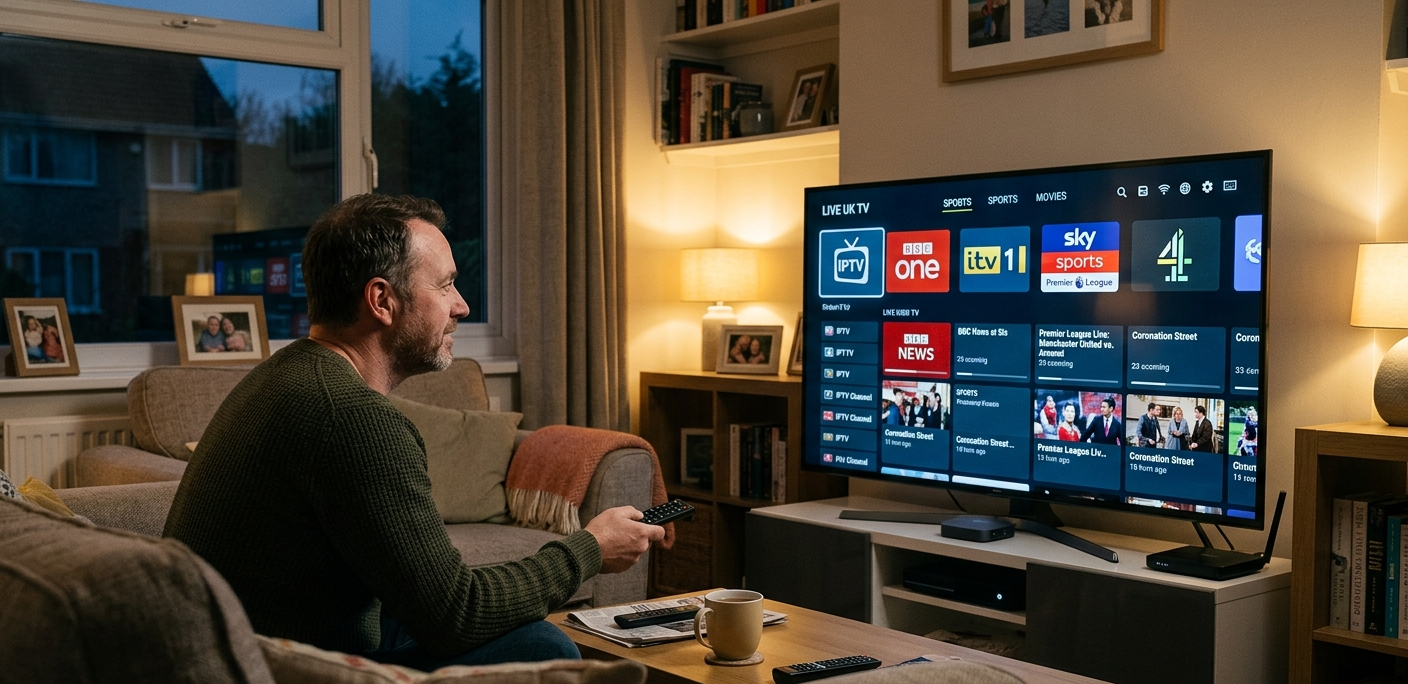
The device landscape here is also notably diverse. MAG boxes remain popular among an older demographic. Android boxes running STBEmu are common among more tech-comfortable customers. Smart TV apps, particularly on Samsung and LG sets, are increasingly standard. And a growing number of customers are accessing IPTV through Firestick with sideloaded applications. A UK IPTV reseller who can only support one or two of these device types competently is leaving a significant portion of the potential market underserved.
Support expectations are high. Not aggressive, most UK customers are perfectly reasonable, but they expect to hear back within a few hours, not a few days. Response time is a meaningful differentiator in this market, particularly for retaining subscribers who encounter their first technical issue and are deciding whether to stay or leave.
Pro Tip: Segment your customer base by device type during onboarding. It takes thirty seconds to note whether a new customer is on a MAG box, Firestick, Android, or smart TV. That information means when they message you with a problem, you already know their setup and can respond with targeted advice immediately rather than asking diagnostic questions first. It makes you look sharp and saves everyone time.
The Technical Bar Is Higher Here Than You Think
IPTV in the UK demands a specific technical baseline that not every provider meets, and many resellers don’t realise this until they’re already fielding complaints.
UK-routed servers matter more here than in many markets. While a CDN delivery node technically anywhere in Europe can serve UK customers, routing quality varies enormously. Content delivered through a genuinely UK-proximate server with proper peering to major UK ISPs, BT Wholesale infrastructure, Virgin Media’s network, TalkTalk’s backbone, delivers meaningfully more consistent quality than content routed through a distant European node with multiple hops.
Anti-freeze systems, similarly, need to be calibrated for the demand profile of UK sport content specifically. A generic anti-freeze configuration might switch stream sources on a two or three second delay. During live sport, that delay is noticeable and frustrating. Properly tuned anti-freeze for a UK-focused panel should be responding in under a second.
EPG accuracy is another technical point that matters more in the UK than elsewhere, simply because customers here are accustomed to reliable programme guide information from years of Freeview and other services. An EPG that’s consistently wrong or missing data is a persistent low-level irritant that contributes to churn even when stream quality is otherwise acceptable.
It’s worth thinking about this as a composite score rather than a single number. Multiply server uptime, stream continuity during peak sport, and EPG accuracy together, and the real customer experience is lower than any individual figure suggests. A provider quoting 99% server uptime, 94% stream continuity, and 88% EPG accuracy is actually delivering an effective experience closer to 82%, once all three are combined. That composite view is how you should be evaluating providers, not just headline uptime numbers.
Pricing Reality in the UK Market Right Now
The UK market has matured considerably over the past two years. The race-to-the-bottom pricing that characterised earlier years, subscriptions sold for £4 or £5 a month by resellers who weren’t going to last, has largely cleared out, replaced by a more stable middle band of £8–£14/month for a single-connection HD subscription.
This is genuinely good news for serious resellers. It means there’s a functioning price floor that supports real margins. It also means customers are somewhat more accustomed to paying a reasonable price for a reliable service, rather than expecting broadcast-quality streaming for less than the cost of a coffee.
Premium tiers, multi-connection packages, 4K-capable subscriptions, VOD-heavy packages, are pushing £15–£22/month without significant customer resistance when the quality justifies it. The willingness to pay for reliability is real in this market.
The maths behind this is straightforward: your monthly revenue is the sum of each subscription tier’s price multiplied by how many active subscribers sit at that tier. A mixed portfolio, say, 60 standard subscribers at £9 and 25 premium at £16, generates £540 plus £400, or £940 gross monthly, before wholesale credit costs. That’s a realistic, achievable number for a reseller twelve months into building a UK operation.
Pro Tip: Introduce a multi-connection upsell during onboarding, not three months later. When a customer first activates and is happy with the service, they’re at peak receptivity. Offer a household package, two or three connections at a modest discount, and a meaningful percentage will take it immediately. It raises average revenue per customer and reduces churn because now the whole household is on the service.
The Mistakes That End UK IPTV Businesses Prematurely
I’ve watched enough resellers come and go in this market to have a fairly clear taxonomy of the things that kill these businesses.
Choosing a provider based on price alone. The wholesale credit market has plenty of cheap options. Almost all of them are cheap for a reason, oversold servers, poor infrastructure, minimal support. In the UK market specifically, where demand spikes are intense and customers are vocal, a cheap provider is a liability.
Ignoring churn until it’s catastrophic. Churn in this business compounds silently. Losing five customers a month feels manageable when you’re signing eight. But those five losses carry institutional knowledge of your failures, and they tell people. The resellers who track churn weekly and investigate every cancellation quickly are the ones who build durable businesses.
Overselling connection credits. Some resellers, under margin pressure, allocate more connections than their credit pool actually supports. This works until it doesn’t, and when it stops working, it stops working for everyone simultaneously, usually during a high-demand moment.
No onboarding process. First impressions determine renewal probability more than almost anything that comes after. A customer who struggles to set up their service and doesn’t hear back from support for 24 hours will almost certainly not renew, regardless of how good the streams are once they get it working.
Building Something That Lasts in the UK Market
The resellers who build genuinely sustainable IPTV businesses in the UK share a consistent trait: they treat it as a real business, not a side experiment. That means proper systems, proper margins, proper customer communication, and critically, proper infrastructure from the ground up.
Britishreseller.com has become my consistent recommendation for UK-based resellers who are serious about longevity over quick wins. The platform understands the specific demands of the UK market in a way that generic IPTV wholesale operations simply don’t, the peak load management, the anti-freeze calibration, the reseller-level support that actually responds. In a market where your reputation lives and dies on Saturday evening performance, that specificity matters enormously.
IPTV Reseller Success Checklist
- Test your provider during a live major fixture before committing customer subscriptions to them. Nothing else tells you what you need to know. Not trials on a Tuesday afternoon. Not testimonials. Peak sport, real load, real verdict.
- Explain the 3pm blackout restriction to every new UK customer at onboarding. Without exception. It is not optional information, it is a weekly event that will confuse and frustrate uninformed customers every single Saturday.
- Support multiple device types competently. MAG boxes, STBEmu, IPTV Smarters, Firestick, know how to guide customers through basic setup and troubleshooting on each. It is table stakes for a UK IPTV Panel reseller operation in 2026.
- Price for the market that exists, not the race to the bottom. The UK market sustains £8–£14/month for reliable HD service. Price in that range, deliver that quality, and compete on reliability rather than cost.
- Track every customer cancellation and understand why it happened. Not to argue with the customer, but to identify patterns in your own operation that are driving them away. One cancellation is an event. Three for the same reason is a system failure that needs fixing immediately.